
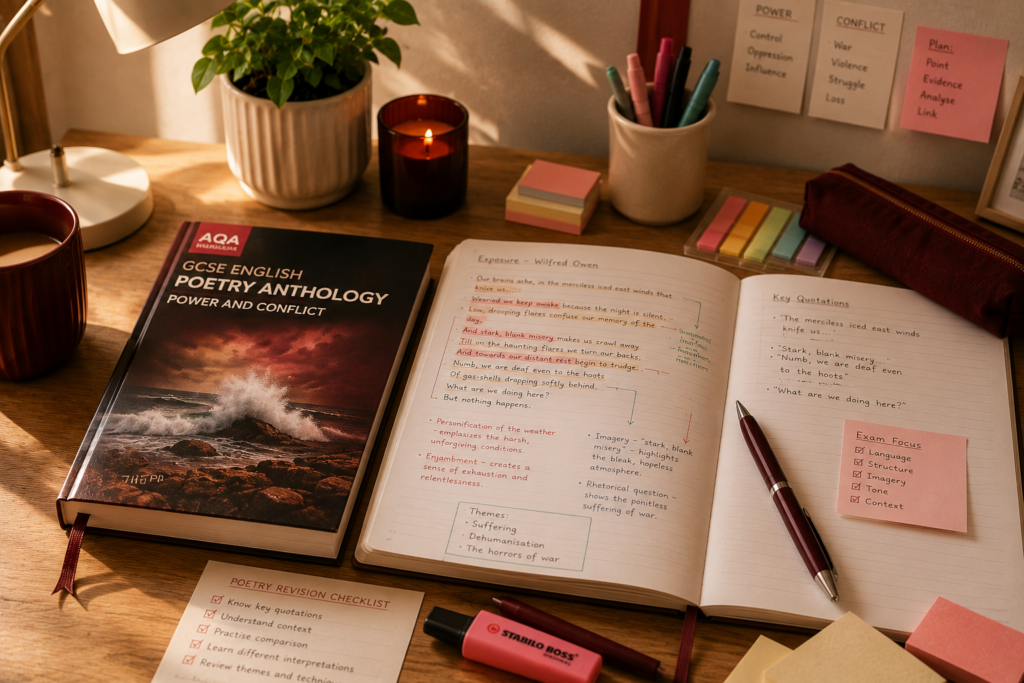
A student can know that a poem is about conflict, power, or identity and still freeze when the exam asks for a comparison. That is because knowing a poem is not the same as being able to use it. Learning how to revise poetry anthology GCSE effectively means turning a collection of individual poems into secure, flexible knowledge that can be selected, compared, and analyzed under timed conditions.
For parents, the goal is not for a child to memorize pages of notes. It is for them to enter the exam knowing exactly how to find a strong comparison, use precise evidence, and explain the writer’s choices. That confidence comes from a structured revision routine, not last-minute rereading.
Start with the exam task, not the poem
For AQA GCSE English Literature, the anthology question asks students to compare a named poem with one other poem from the collection. They need to write about the given theme, analyze methods, and make relevant comparisons. This changes how revision should work.
A student does not need to prepare a separate full essay for every possible pairing. That approach is time-consuming and often creates rigid responses. Instead, they need to understand the central ideas, methods, and possible links across the anthology well enough to make a thoughtful choice on the day.
Begin by looking at the poems through the themes that recur in the collection. In the Power and Conflict anthology, for example, these might include the effects of war, power in nature, abuse of authority, memory, loss, individual suffering, and identity. A poem can fit more than one theme. In fact, that flexibility is useful: a student who understands that a poem presents both the power of nature and human vulnerability has more options when choosing a comparison.
Build a one-page knowledge base for every poem
Revision becomes manageable when each poem has a concise, reliable profile. Long copied notes can feel productive, but they are difficult to retrieve in an exam. Aim for one page per poem, written in the student’s own words.
Each page should include the poem’s core message, its speaker or viewpoint, a brief context point where it genuinely supports interpretation, four or five short quotations, and the most significant methods. It should also identify two or three poems that would make strong comparisons.
The most valuable part is the explanation beside each quotation. Do not simply record that a poem uses imagery or a metaphor. Explain what that choice suggests and why it matters to the poem’s wider message. For example, a note might move from “violent verb” to “the verb makes conflict feel immediate and uncontrollable, showing how ordinary people are overwhelmed by events beyond their control.” This is the analytical thinking examiners reward.
Short quotations are usually the most practical choice. Students should be able to remember and embed a few precise words rather than struggle to reproduce a long line inaccurately. A carefully analyzed single word can be more effective than a vague reference to an entire stanza.
Use retrieval, not just rereading
Once notes exist, revision needs to test memory. Close the book and ask: What is the poem’s main argument? Which quotation best shows isolation? How does the structure change? Which poem would I compare it with for the theme of power?
Flashcards can help, provided they demand an answer rather than simply displaying information. One side might ask, “How is power presented in this poem?” The other should contain a concise answer with a quotation and method. A blank-poem grid is also effective: students write the poem title at the top, then fill in themes, quotations, methods, and comparison links from memory.
If a student cannot retrieve an idea without looking, it has not yet become exam-ready knowledge. This is not a reason for panic. It is simply a clear sign of what to revisit.
How to revise poetry anthology GCSE comparisons
Strong comparison is more than writing “similarly” several times. It means showing how two poets present a related idea, while recognizing meaningful differences in viewpoint, method, or message.
Students should create comparison pairs around themes, but avoid treating them as fixed. A useful comparison table can include the shared theme, the key difference, one quotation from each poem, and a method worth discussing. For example, two poems may both show the damage caused by conflict, but one may focus on a soldier’s immediate fear while the other reveals a civilian’s lasting grief. That difference gives the essay direction.
A clear comparative sentence often follows this pattern: both poets present the idea, but Poet A does so through a particular method or perspective, whereas Poet B emphasizes something different. The comparison should happen throughout the paragraph, not be saved for a rushed final section.
There is a trade-off here. Some students try to compare every sentence and lose depth; others write two separate mini-essays and add a comparison at the end. The better approach is balanced: explore one poem closely, then connect the second poem at the point where the ideas or methods genuinely meet.
Practice analytical paragraphs before full essays
A full essay is useful, but it is not the only way to revise. Students who find essays overwhelming often benefit more from practicing one excellent paragraph at a time. This isolates the skill that needs attention: choosing evidence, zooming in on language, discussing structure, or comparing clearly.
A secure paragraph needs a focused point, relevant evidence, analysis of the writer’s method, and a developed link to the comparison poem. Rather than forcing elaborate terminology, students should prioritize accurate explanation. Saying that a repeated phrase makes an idea feel inescapable is stronger than naming repetition without explaining its effect.
Context should support the reading, not replace it. Examiners do not award high marks for a memorized fact that has been attached to a poem without relevance. A well-chosen context point can illuminate why a writer may present authority, war, class, or gender in a particular way. The poem itself must remain at the center of the response.
For students targeting Grades 7 to 9, the next step is to explore alternative interpretations. They might consider whether a powerful image is frightening, awe-inspiring, or both. This does not mean inventing complicated ideas. It means showing that the student can think carefully about the poem’s ambiguities.
Use timed practice to turn knowledge into marks
Revision can feel reassuring at home yet fall apart under exam timing. Timed practice exposes this gap early and gives students a chance to improve it.
Start with manageable tasks. Give ten minutes to plan a comparison question: identify the theme, select the comparison poem, choose two or three quotations from each, and write a brief argument. Then move to a timed introduction and one paragraph. Once the student can plan and write with control, complete full responses under realistic conditions.
After each practice answer, review it with three questions: Have I answered the exact question? Have I analyzed the writer’s choices rather than retold the poem? Have I compared both poems regularly and purposefully? This feedback process is where improvement happens. Marks alone do not tell a student what to do differently next time.
At NL Tutoring, this is the kind of examiner-informed process used to identify whether a student’s main barrier is poem knowledge, analytical writing, comparison, or timing. Different gaps need different next steps. A student with excellent ideas but weak structure needs a different plan from one who cannot yet recall quotations.
A revision routine that students can sustain
Consistency matters more than occasional marathon sessions. Two or three focused poetry sessions each week are usually more effective than trying to cover the entire anthology in one evening. A session might begin with five minutes of quotation retrieval, move into one poem or comparison pair, and end with a short analytical paragraph or plan.
Rotate between poems that feel secure and those that do not. Only revising favorites creates false confidence, while spending every session on difficult poems can drain motivation. Keep a simple record of confidence levels so that weaker areas receive more attention without becoming the whole revision plan.
Parents can help by asking specific questions rather than asking whether revision has been done. “Which poem could you compare with this one and why?” invites useful thinking. “Show me one quotation you can analyze in two ways” is even better. These brief conversations make revision active without requiring parents to be English specialists.
A poetry anthology is not a test of who can memorize the most notes. It is a test of whether a student can make a clear, supported argument about two poems when it counts. With repeated retrieval, purposeful comparison, and feedback on real exam writing, that skill becomes far more reliable – and a student begins to see that the anthology is a set of connected ideas they can handle with confidence.