
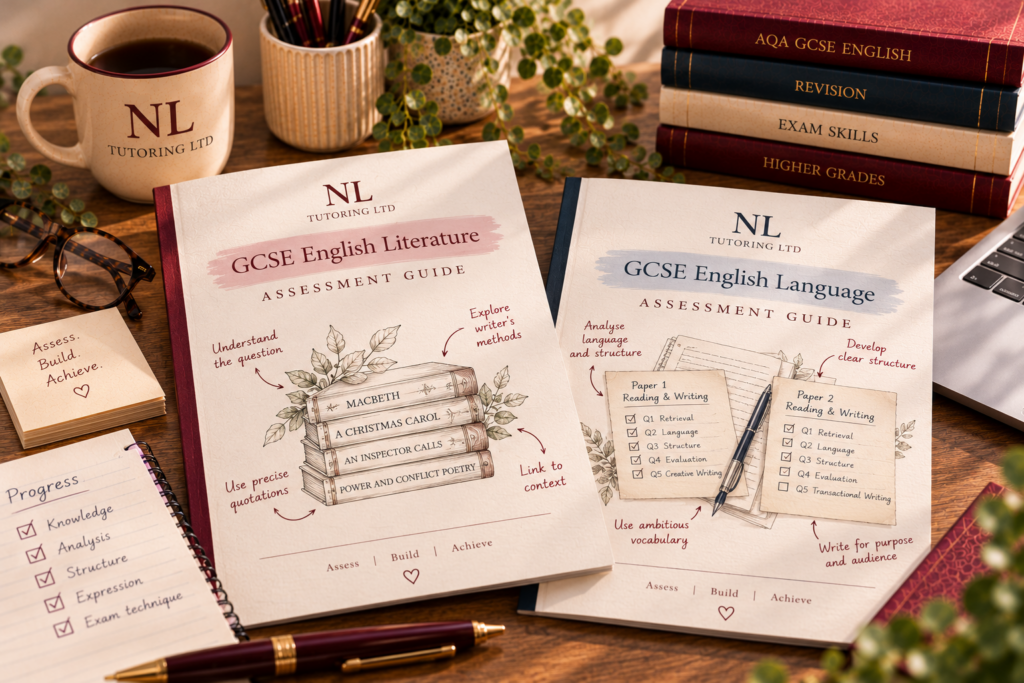
A student can spend hours revising English and still come away from a practice paper unsure why their mark has barely moved. Often, the issue is not effort. It is that no one has identified the precise gap between what the student knows and what the exam requires. This English tuition assessment guide explains how a purposeful assessment should turn uncertainty into a clear plan for GCSE progress.
For parents, an assessment should provide more than a broad statement that a child needs help with English. It should show whether the barrier lies in reading accuracy, analytical writing, vocabulary, literature knowledge, timing, confidence, or a combination of these. For students, it should be the start of structured support, not another high-pressure test.
Why a GCSE English assessment comes first
GCSE English Language and English Literature demand several skills at once. Students must read carefully, select telling evidence, explain effects with precision, organize a sustained response, and adapt their approach to the question. In Literature, they must also retain secure knowledge of texts, characters, themes, and relevant context. A weakness in one area can limit marks across an entire answer.
This is why generic homework support can only go so far. A student may be able to discuss a novel confidently at home but struggle to turn ideas into a focused, well-developed essay under timed conditions. Another may write fluently but lose marks because quotations are poorly chosen or analysis remains descriptive. A good assessment separates these issues rather than treating English as one single skill.
It also avoids an unhelpful assumption: that a current school grade tells the whole story. School reports are valuable, but they cannot always reveal the exact habits affecting a student’s performance. A diagnostic assessment looks beneath the grade and asks what is happening on the page.
What an English tuition assessment guide should examine
A useful assessment combines evidence from written work with professional conversation. The tutor needs to understand not only what a student produced, but how they approached the task and how confidently they can explain their choices.
Reading and interpretation
Students need to move beyond spotting a technique or finding a quotation. Strong responses explain how a writer’s choices shape meaning and affect the reader. An assessment can reveal whether a student understands the text securely, whether they infer confidently, and whether their comments remain too general.
For a student aiming for a secure pass, the priority may be selecting relevant evidence and explaining it clearly. For a student targeting Grades 7 to 9, the focus may be on perceptive interpretations, precise subject terminology, and a thoughtful line of argument. The right next step depends on the student, not simply on their year group.
Analytical writing and essay structure
Many students have good ideas but cannot consistently shape them into exam-ready paragraphs. They may repeat the question, list techniques, or add quotations without explaining their significance. Others produce lengthy introductions that use valuable exam time without earning many marks.
Assessment should look at the whole response: the opening argument, paragraph focus, quotation choice, analysis, links between ideas, and final sense of control. It should identify whether a student needs a dependable paragraph structure first or whether they are ready to develop more sophisticated analysis.
Subject knowledge and recall
English Literature revision is not just rereading a text or highlighting a booklet. Students need accessible knowledge they can retrieve when faced with an unfamiliar question. If they cannot recall key moments, short quotations, or connections between characters and themes, their essay will become narrow.
The assessment process should establish how secure that knowledge is. A student who has read Macbeth may still need a clearer understanding of Shakespeare’s presentation of ambition, power, guilt, and masculinity. Equally, a student with excellent text knowledge may need help choosing the most relevant material for a specific question.
Exam technique, timing, and confidence
Timed work often exposes a different picture from untimed classwork. Students can know what to do but rush the final question, spend too long planning, or freeze when a question feels unfamiliar. These are teachable habits, provided they are recognized early.
Confidence matters here, but it should not be treated as a vague quality. A student becomes more confident when they know how to plan, what an effective answer looks like, and how to improve a paragraph independently. Clear routines reduce panic because the next step is visible.
The Assess, Build, Achieve approach
At NL Tutoring, assessment is the first stage of the Assess, Build, Achieve framework. It creates a starting point that is honest, specific, and encouraging. No student benefits from being told they are simply “behind.” They need to know what they can already do and which skill will make the greatest difference next.
Assess: establish the real starting point
This stage uses carefully chosen tasks and discussion to identify strengths, gaps, and exam habits. A qualified English teacher with current AQA examiner insight can assess written work against the qualities examiners reward, rather than against vague impressions of whether an essay sounds advanced.
Parents should expect clear feedback. That might mean identifying that a student understands the extract but needs to explain writer’s methods more precisely, or that their Literature essays need a more sustained argument. The finding should be specific enough to guide tuition from the first session.
Build: teach the missing skill deliberately
Once the gap is clear, tuition should not jump from one worksheet to another. It should build skills in a logical sequence. A student who struggles with analysis may first learn how to select a short quotation, zoom in on a word or phrase, and explain its effect. Only then can they develop more independent, nuanced interpretations.
For some students, building means strengthening core reading and writing foundations. For others, it means refining an already capable response so that it is sharper, more concise, and better targeted to the assessment objectives. Both routes deserve expert teaching and consistent practice.
Achieve: apply learning under exam conditions
Progress becomes meaningful when a student can use the skill independently in a new question and within a time limit. This is where targeted practice, feedback, and revision routines matter. The aim is not to memorize a model answer. It is to give students a method they can adapt on exam day.
A student may initially need plenty of scaffolding. Over time, that support should reduce as their planning, writing, and checking habits become more secure. This is how confidence becomes evidence-based rather than temporary reassurance.
Questions parents should ask before choosing tuition
An initial assessment is also a chance for families to judge whether the support is genuinely specialized. Ask how the tutor will identify your child’s gaps, how progress will be measured, and how teaching will connect to the exam board’s assessment criteria. A clear answer should involve specific skills, reviewed work, and realistic next steps.
It is also sensible to ask who will assess the work. GCSE English is a subject where informed feedback matters greatly. Advice such as “add more analysis” may be true, but it is not enough on its own. Students need to be shown what stronger analysis looks like, why it earns credit, and how to recreate it independently.
Frequency of tuition depends on the student’s needs, starting point, and exam timeline. A Year 7 student may benefit from building foundational reading and writing habits steadily. A Year 11 student may need a more intensive focus on exam technique, text knowledge, and timed responses. More sessions are not automatically better if the work between sessions is unfocused; equally, too little consistency can make it difficult for new habits to stick.
What good progress looks like after assessment
Parents naturally want to know whether tuition is working. Better marks matter, but early progress often appears first in the quality of a student’s process. They begin planning with purpose, choosing evidence more efficiently, and explaining their ideas rather than waiting for prompts. Their revision becomes more targeted because they know what they are trying to improve.
Over time, this should lead to stronger written responses and greater resilience when a question is challenging. A student working toward a Grade 4 needs reliable methods that secure available marks. A student aspiring to the highest grades needs the same security, alongside the precision and independence that distinguish top-level work.
The most valuable assessment does not label a student. It gives them a route forward. When families can see the gap, the teaching plan, and the evidence of progress, GCSE English becomes a subject their child can approach with greater clarity and calm.